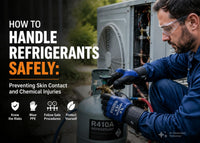
Refrigerant handling is a routine part of HVAC installation, maintenance, and repair. From checking system performance to charging and recovering refrigerant, HVAC technicians work with pressurized refrigerant systems every day.
However, improper refrigerant handling can create serious workplace hazards. Liquid refrigerant released under pressure can cause frostbite, cold burns, and eye injuries within seconds. By following proper refrigerant safety procedures, using the right protective equipment, and understanding potential risks, HVAC professionals can complete service work more safely and efficiently.
This guide covers essential refrigerant safety practices to help HVAC technicians prevent exposure and reduce workplace injuries.
Understand the Risks of Refrigerant Exposure
Before working with any HVAC refrigerant, technicians must understand the potential hazards involved.
Refrigerants are stored inside HVAC systems under pressure. When a refrigerant line is opened, disconnected, or damaged, liquid refrigerant can rapidly expand into gas. During this process, the refrigerant temperature can become extremely low.
Direct contact with liquid refrigerant may cause:
● Frostbite or cold burns
● Skin irritation
● Tissue damage
● Eye injuries if refrigerant splashes
● Respiratory discomfort in poorly ventilated areas
Many technicians assume refrigerants are harmless because they are commonly used in air conditioning systems. However, refrigerants require careful handling because their physical properties can create unexpected dangers.
HVAC training materials emphasize that technicians regularly work with refrigerants, pressure measurements, temperature checks, and charging procedures, making safety awareness a critical part of professional HVAC service.
Modern HVAC systems rely on refrigeration cycles to move heat from one location to another. Understanding heat transfer, refrigerant behavior, and pressure relationships helps technicians recognize why refrigerant handling requires caution.
Always Wear Proper Personal Protective Equipment (PPE)
One of the simplest and most effective ways to prevent refrigerant injuries is using the correct personal protective equipment.
Before beginning refrigerant-related work, HVAC technicians should wear:
Safety Gloves
Protective gloves create a barrier between the skin and refrigerant.
Recommended gloves should:
● Provide insulation against extremely cold temperatures
● Allow enough flexibility for handling tools
● Cover the hands and wrists
Avoid working with refrigerant while wearing thin fabric gloves or without gloves. Even a short moment of direct contact with liquid refrigerant can cause injury.
Safety Glasses or Goggles
Eye protection is essential because refrigerant liquid can spray unexpectedly when:
● Opening service valves
● Disconnecting hoses
● Repairing leaking components
● Recovering refrigerant
A small refrigerant splash can cause serious eye discomfort or injury.
Long Sleeves and Protective Clothing
HVAC technicians often work in tight spaces where accidental leaks can occur.
Long sleeves help protect:
● Arms
● Wrists
● Exposed skin areas
Protective clothing is especially important when servicing larger systems containing greater refrigerant volumes.
Follow Safe Refrigerant Handling Procedures
Proper procedures are the foundation of refrigerant safety.
Inspect Equipment Before Starting Work
Before connecting gauges or opening refrigerant systems:
● Check hoses for cracks or damage
● Inspect service ports
● Confirm connections are secure
● Verify tools are in good condition
Damaged hoses or loose fittings can create unexpected refrigerant leaks.
Open Valves Slowly and Carefully
Suddenly opening refrigerant valves can cause:
● Rapid pressure changes
● Liquid refrigerant discharge
● Hose movement
● Accidental exposure
Always control the flow of refrigerant and avoid positioning your hands directly near connection points.
Avoid Touching Refrigerant Lines With Bare Hands
During HVAC service, technicians may encounter extremely cold components.
Avoid:
● Holding leaking copper tubing
● Touching frost-covered connections
● Handling refrigerant-soaked equipment without gloves
A frozen surface may appear harmless but can quickly damage skin tissue.
Use Proper Refrigerant Recovery Equipment
Professional HVAC service requires recovering refrigerants safely rather than releasing them into the environment.
Proper recovery procedures:
● Protect technicians from exposure
● Prevent refrigerant leaks
● Support environmental compliance
● Maintain equipment reliability
Always follow manufacturer instructions and industry regulations when recovering or charging refrigerant.
Maintain Proper Ventilation During Refrigerant Work
Although refrigerants are commonly used in HVAC systems, technicians should avoid working in areas with poor airflow.
Poor ventilation may increase risks because refrigerant vapor can accumulate in enclosed spaces.
Examples of higher-risk locations include:
● Small mechanical rooms
● Crawl spaces
● Storage areas
● Confined equipment rooms
Before starting work:
● Check the surrounding environment
● Ensure adequate airflow
● Use ventilation equipment when necessary
Good ventilation improves workplace safety and allows technicians to respond quickly if a refrigerant leak occurs.
HVAC systems themselves are designed to manage temperature, humidity, ventilation, and indoor air quality, showing the importance of proper airflow control in HVAC environments.
Know What to Do If Refrigerant Contacts Your Skin
Even experienced technicians can experience accidental refrigerant exposure. Knowing the correct response can reduce injury severity.
If liquid refrigerant contacts your skin:
Step 1: Move Away From the Leak Source
Immediately stop the exposure and move away from the refrigerant release area.
Do not continue working while refrigerant is contacting your skin.
Step 2: Remove Contaminated Clothing Carefully
If gloves, sleeves, or clothing become exposed:
● Remove contaminated items carefully
● Avoid spreading refrigerant to other skin areas
Step 3: Warm the Affected Area Gradually
Do not rub or apply direct high heat to the injured area.
Instead:
● Use warm water
● Allow the skin temperature to recover gradually
Step 4: Seek Medical Attention if Needed
Professional medical evaluation may be necessary if there are signs of:
● Severe pain
● Blisters
● Skin discoloration
● Persistent numbness
● Tissue damage
Never ignore refrigerant-related injuries, even if symptoms appear minor at first.
Avoid Common Refrigerant Safety Mistakes
Many refrigerant injuries happen because of simple mistakes.
HVAC technicians should avoid:
Working Without PPE
Skipping gloves or eye protection increases unnecessary risk.
Disconnecting Refrigerant Lines Too Quickly
Pressure inside the system can release refrigerant unexpectedly.
Ignoring Small Leaks
A small leak can become a larger safety problem.
Always investigate:
● Unusual sounds
● Frost formation
● Oil residue near connections
● Pressure abnormalities
Handling Refrigerant When Tired or Distracted
HVAC work requires attention to detail.
Fatigue can lead to:
● Incorrect valve operation
● Poor tool handling
● Safety procedure mistakes
Refrigerant Safety Is Part of Professional HVAC Service
A professional HVAC technician does more than repair and install equipment. Safety is an essential part of delivering reliable service.
Proper refrigerant handling helps technicians:
● Prevent workplace injuries
● Protect customers and property
● Maintain HVAC system performance
● Follow industry standards
Whether working on residential air conditioners, commercial HVAC systems, or refrigeration equipment, technicians should treat refrigerant safety as a priority during every service call.
The best HVAC professionals combine technical knowledge with safe work habits. Understanding refrigerant properties, using protective equipment, and following correct procedures allow technicians to complete jobs efficiently while reducing workplace risks.
Conclusion
Refrigerants make modern HVAC systems possible, but they must always be handled with care. Direct skin contact, improper tools, and unsafe procedures can lead to serious injuries.
By wearing proper PPE, following safe handling practices, maintaining ventilation, and understanding emergency response procedures, HVAC technicians can greatly reduce refrigerant-related risks.
Workplace safety is not only about preventing accidents—it is about building professional habits that protect technicians throughout their careers.Safe refrigerant handling is a key skill every HVAC technician should master.