Whether you’re a homeowner noticing a strange noise from your air handler, a facilities manager reviewing a maintenance contract, or simply someone curious about the systems that keep buildings comfortable, you’ve likely come across the acronym HVAC. It’s everywhere: on service vans, building permits, and energy bills — yet many people aren’t entirely sure what it means or how it works. This guide breaks it all down in clear, straightforward terms.
What Does HVAC Stand For?
HVAC stands for Heating, Ventilation, and Air Conditioning. It is the broad term used to describe the systems and technologies responsible for regulating the temperature, humidity, air quality, and air movement within buildings, from private homes and commercial offices to hospitals, data centres, and industrial facilities.
Today, “air conditioning” no longer refers only to cooling. Modern HVAC encompasses the total control of a building’s indoor environment, managing:
- Temperature: keeping spaces within a comfortable thermal range
- Humidity: controlling the amount of moisture in the air
- Ventilation: supplying fresh outdoor air and diluting indoor pollutants
- Air filtration: removing dust, pollen, and other airborne particles
- Air movement: circulating air evenly throughout occupied spaces
- Sound: minimising noise generated by mechanical equipment

Why Does HVAC Matter?
The most immediate purpose of an HVAC system is human comfort. Research has established that the comfort zone for most people falls between 68°F and 75°F (20°C–25°C), with a relative humidity level between 30% and 60%. Outside these ranges, people begin to feel too cold, too hot, too dry, or uncomfortably muggy.
But comfort is only part of the story. Properly designed HVAC systems also protect occupant health by maintaining good indoor air quality (IAQ), preserve the structural integrity of buildings by controlling moisture, support productivity in workplaces, and play a critical role in specialised environments such as server rooms, clean rooms, and operating theatres where precise environmental conditions are essential.
The Seven Core Processes of Air Conditioning
A fully functional HVAC system is capable of performing seven fundamental processes, depending on the climate and the needs of the space:
1. Heating: Adding thermal energy to raise or maintain the temperature of a space during cold conditions.
2. Cooling: Removing thermal energy to lower or maintain the temperature of a space during warm conditions.
3. Humidifying: Adding water vapour to the air when conditions are too dry, typically during the winter months.
4. Dehumidifying: Removing excess moisture from the air to prevent mold growth and improve comfort in humid climates.
5. Air Cleaning: Filtering particulates such as dust, pollen, and biological contaminants from the supply air.
6. Ventilating: Exchanging indoor air with fresh outdoor air to dilute gaseous contaminants and maintain air quality. This can be achieved naturally (through openings) or mechanically (via fans and ductwork).
7. Air Movement: Circulating and mixing air throughout the building to distribute the effects of the above processes evenly.
Not all seven processes are required in every climate. A building in a consistently warm, dry region may never require humidification, while a facility in a cold northern climate may not need cooling for most of the year. HVAC systems are designed with these regional and functional differences in mind.

The Key Components of an HVAC System
While HVAC systems vary widely in scale and configuration, most share a common set of core components:
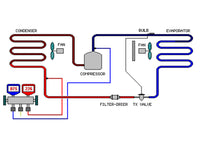
1. Compressor: Often described as the heart of the system, the compressor pressurises refrigerant and drives the refrigeration cycle.
2. Condenser: Releases heat absorbed from the building to the outside environment, changing refrigerant from a hot vapour to a liquid.
3. Evaporator: Absorbs heat from indoor air as refrigerant evaporates, producing the cooling effect felt inside a space.
4. Metering Device: Controls how much refrigerant enters the evaporator, regulating the system’s capacity and efficiency.
5. Air Handling Unit (AHU): Circulates conditioned air throughout the building via a network of ducts, filters, and fans.
6. Control System: Thermostats, sensors, and increasingly sophisticated digital controllers that monitor and adjust system performance in real time.

HVAC System Types at a Glance
HVAC systems come in many configurations. Residential properties commonly use split systems, where an outdoor unit houses the compressor and condenser while an indoor air handler manages distribution. Commercial buildings often rely on rooftop packaged units, variable air volume (VAV) systems, or large central plant setups featuring chillers, boilers, and cooling towers. Heat pumps, which can both heat and cool by reversing the refrigeration cycle, are growing in popularity for their energy efficiency. Geothermal systems take this a step further, exchanging heat with the stable temperature of the ground rather than the outdoor air.
A Note on Energy and Efficiency
HVAC systems are among the largest consumers of energy in any building. According to industry standards bodies such as ASHRAE (the American Society of Heating, Refrigerating and Air-Conditioning Engineers), optimising HVAC performance is one of the most impactful steps a building owner can take toward reducing energy costs and environmental impact. This includes correct system sizing, proper insulation, regular maintenance, and the use of smart controls that adjust operation based on occupancy and outdoor conditions.
Final Thoughts
HVAC is far more than a thermostat and a set of vents. It is a complex, interconnected system of mechanical, electrical, and control technologies working together to create safe, comfortable, and productive indoor environments. Understanding the fundamentals: what the system does, why it matters, and how its key components work, is the first step toward making informed decisions about installation, maintenance, and upgrades.
In future articles in this Resource Centre, we will explore each of these topics in greater depth: from refrigerants and psychrometrics to system selection, energy efficiency, and the latest advances in building automation. Stay tuned.