On a hot summer day, you press a button, and within minutes, cool air begins flowing through your home or office. It feels almost magical, but it is, in fact, a precise and elegant piece of engineering that has remained fundamentally unchanged for over a century. The technology behind it is called the refrigeration cycle, and understanding how it works will change the way you think about the equipment that keeps you comfortable year-round.
Contrary to what many people assume, an air conditioner does not generate cold air. It moves heat. More specifically, it continuously absorbs heat from inside a building and releases it outside, leaving the indoor air cooler in the process. This article walks through exactly how that happens, step by step, explaining the role of each major component in plain language.

The Key Principle: Heat Always Moves from Warm to Cool
Before diving into the components, it helps to understand the fundamental physical principle that makes the refrigeration cycle possible. Heat naturally flows from warmer areas to cooler ones, never in the opposite direction on its own. A hot cup of coffee cools down in a cold room; it will never spontaneously heat up.
An air conditioning system exploits this principle by creating two environments: one that is very cold (to absorb heat from indoors) and one that is very hot (to release that heat outdoors). The substance used to create these conditions and carry heat from one place to the other is called a refrigerant.

The Four Core Components
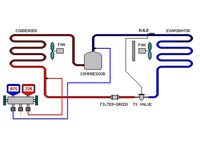
The refrigeration cycle relies on four key components, each playing a distinct role. Together, they form a closed loop through which refrigerant flows continuously during operation.

1. The Compressor: The Heart of the System
The compressor is often called the heart of the HVAC system, and for good reason: it is the component that drives the entire cycle. Located in the outdoor unit, its job is to compress low-pressure refrigerant gas into a high-pressure, high-temperature gas.
Think of it this way: when you compress a gas, you concentrate its energy, raising both its pressure and its temperature. The compressor takes refrigerant that has already absorbed heat from inside the building and squeezes it tightly, making it even hotter so it can release that heat effectively to the outdoor air. Without the compressor, refrigerant could not circulate and the system would not function.
The compressor is also the most mechanically complex and typically most expensive component in the system. Protecting it through proper maintenance (ensuring adequate refrigerant charge, clean filters, and correct airflow) is one of the most important things a building owner or facilities manager can do to extend the life of their HVAC system.

2. The Condenser: Releasing Heat Outdoors
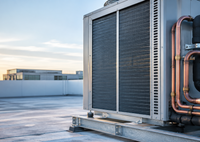
After leaving the compressor, the hot, high-pressure refrigerant gas travels to the condenser coil, also located in the outdoor unit. The condenser’s job is to release the heat that the refrigerant is carrying into the outdoor air.
As the hot refrigerant gas flows through the condenser coil, a fan blows outdoor air across it. Because the refrigerant is hotter than the outdoor air, heat flows from the refrigerant into the air exactly as our earlier principle predicts. As the refrigerant loses heat, it cools down and transitions from a gas back into a liquid. This process is called condensation, which is where the component gets its name.
This is also why the air blowing out of an outdoor AC unit feels hot and it is carrying away the heat that was extracted from inside the building. And it is why outdoor unit placement matters: a condenser surrounded by walls, shrubs, or debris cannot dissipate heat effectively, forcing the system to work harder and reducing its efficiency and lifespan.

3. The Metering Device: The Gatekeeper
After the condenser, the refrigerant is a warm, high-pressure liquid. Before it can absorb heat from the indoor air, it needs to be cooled down dramatically. This is the job of the metering device, sometimes called the expansion device.
The metering device creates a restriction in the refrigerant line, forcing the liquid refrigerant through a very small opening. As the refrigerant passes through this restriction, the pressure drops sharply. When pressure drops rapidly, temperature drops with it, the same effect you feel when you release air from a pressurized tire and the valve feels cold. The refrigerant emerges from the metering device as a cold, low-pressure mixture of liquid and vapor, ready to absorb heat.
There are two common types of metering device. Fixed orifice devices (such as a piston or capillary tube) provide a constant restriction regardless of conditions. Thermostatic expansion valves (TXVs) and electronic expansion valves (EEVs) are more sophisticated: they modulate the restriction in real time based on the system’s operating conditions, improving efficiency and protecting the compressor from damage caused by liquid refrigerant entering it.

4. The Evaporator: Where the Cooling Actually Happens
The evaporator coil is where the refrigeration cycle delivers its visible result: cool, dehumidified air into the building. Located inside the air handler or furnace cabinet in the indoor unit, the evaporator coil receives the cold, low-pressure refrigerant from the metering device.
A blower fan pulls warm indoor air across the evaporator coil. Because the refrigerant inside the coil is much colder than the air passing over it, heat flows from the air into the refrigerant. As the refrigerant absorbs heat, it evaporates, transitioning from a liquid-vapor mixture back into a gas. This evaporation process is highly effective at absorbing large amounts of heat rapidly, which is why it is the mechanism the system uses to cool the air.
A second effect occurs simultaneously: dehumidification. As warm, humid indoor air contacts the cold evaporator coil, moisture in the air condenses on the coil surface just like water droplets forming on a cold glass on a humid day. This condensate drains away through a condensate drain line, reducing the humidity of the air that is returned to the building. This is why air conditioning systems naturally lower indoor humidity as they cool, and why a properly functioning AC system is also an important tool for moisture control.

The Cycle, Step by Step
Now that each component’s role is clear, here is the complete refrigeration cycle from start to finish:
1. The compressor pressurises low-pressure refrigerant gas, raising its temperature and pressure significantly.
2. The hot, high-pressure gas flows to the condenser coil. A fan blows outdoor air across it, removing heat from the refrigerant. The refrigerant condenses into a warm liquid.
3. The warm liquid refrigerant passes through the metering device, which drops its pressure and temperature sharply, creating a cold liquid-vapour mixture.
4. The cold refrigerant enters the evaporator coil. Indoor air is blown across it, transferring heat from the air into the refrigerant. The refrigerant evaporates back into a gas. The cooled, dehumidified air is distributed throughout the building.
5. The low-pressure refrigerant gas returns to the compressor, and the cycle begins again.
This cycle repeats continuously while the system is running, transferring heat from indoors to outdoors until the indoor temperature reaches the thermostat setpoint, at which point the system cycles off and waits to repeat the process.
What About Heating? The Heat Pump Principle
One of the most elegant features of the refrigeration cycle is that it can be reversed. A heat pump uses a reversing valve to flip the direction of refrigerant flow, turning the outdoor coil into the evaporator (absorbing heat from outdoor air, even in cold weather) and the indoor coil into the condenser (releasing that heat inside the building). The result is efficient heating without combustion.
Heat pumps can extract usable heat from outdoor air even when temperatures drop to well below freezing, making them an increasingly popular choice for both residential and commercial applications in moderate climates. In very cold climates, supplemental heating typically electric resistance strips or a gas furnace, is used when outdoor temperatures fall below the heat pump’s effective operating range.

Common Issues and What They Mean
Understanding the refrigeration cycle also helps make sense of common AC problems and why they occur:
•System blowing warm air: Could indicate low refrigerant charge (a leak), a failed compressor, or a dirty evaporator coil that cannot absorb heat effectively.
•Ice forming on the indoor unit: Typically caused by restricted airflow (dirty filter or blocked return) or low refrigerant, which causes the evaporator to become too cold and freeze the moisture that condenses on it.
•Water leaking indoors: Usually a blocked condensate drain line. As the evaporator dehumidifies the air, condensate has nowhere to go and overflows the drain pan.
•High energy bills without performance change: May indicate a dirty condenser coil struggling to release heat, or a failing compressor working harder than it should.
•Short cycling (system turning on and off frequently): Can indicate an oversized system, low refrigerant, or a failing compressor. Short cycling prevents the system from completing a full refrigeration cycle and dehumidifying the air properly.
Final Thoughts
The refrigeration cycle is a remarkably efficient and reliable process that has been refined over more than a century of engineering. At its core, it is simply about moving heat from where you do not want it to where it does not matter, using refrigerant, pressure changes, and phase transitions to do the work. Understanding each component’s role makes it much easier to appreciate why proper installation, maintenance, and sizing all matter so significantly for long-term performance and efficiency.
In our next article, we explore the refrigerants themselves, what they are, how they differ, and why the industry has been transitioning away from older refrigerant types toward newer, more environmentally responsible alternatives.